Do you get paid for opening and closing? What 15 unpaid minutes a shift cost a casual over a year
Fifteen unpaid minutes on four shifts a week is 48 hours a year, about $1,625 for a Level 2 hospitality casual before super. The Fair Work Ombudsman says set-up, close-down, meetings and training are paid, and hours shouldn't be rounded down.
Yes, in most cases. If the venue asks you to be there, the Fair Work Ombudsman says that time is paid, and it names opening and closing a store, meetings and training (including online or at home) as work. Hours also shouldn't be rounded down to pay you less than you worked.
Fifteen minutes doesn't sound like much. Lose it on four shifts a week and it's 48 hours a year, about $1,625 at the Level 2 casual weekday rate, before weekend rates or super. That's a fortnight's rent in a lot of Sydney share houses, handed back to the venue a quarter-hour at a time.
Short version: time the venue requires is time paid. Setting up before doors, counting the till, closing down after the last guest, a pre-shift briefing and a compulsory online module all count. Rounding your hours down doesn't. This is general information, not legal advice. Wording checked on the Fair Work Ombudsman's Time worked is time paid page (updated 8 October 2026) on 1 November 2026.
What the Fair Work Ombudsman actually says
The FWO's Paying wages page puts it plainly: "Employees need to be paid for all time spent working." Its list is meetings, training (including online or at home) and time spent opening or closing a store. It adds that if an employer requires you to be present, you must be paid for that time.
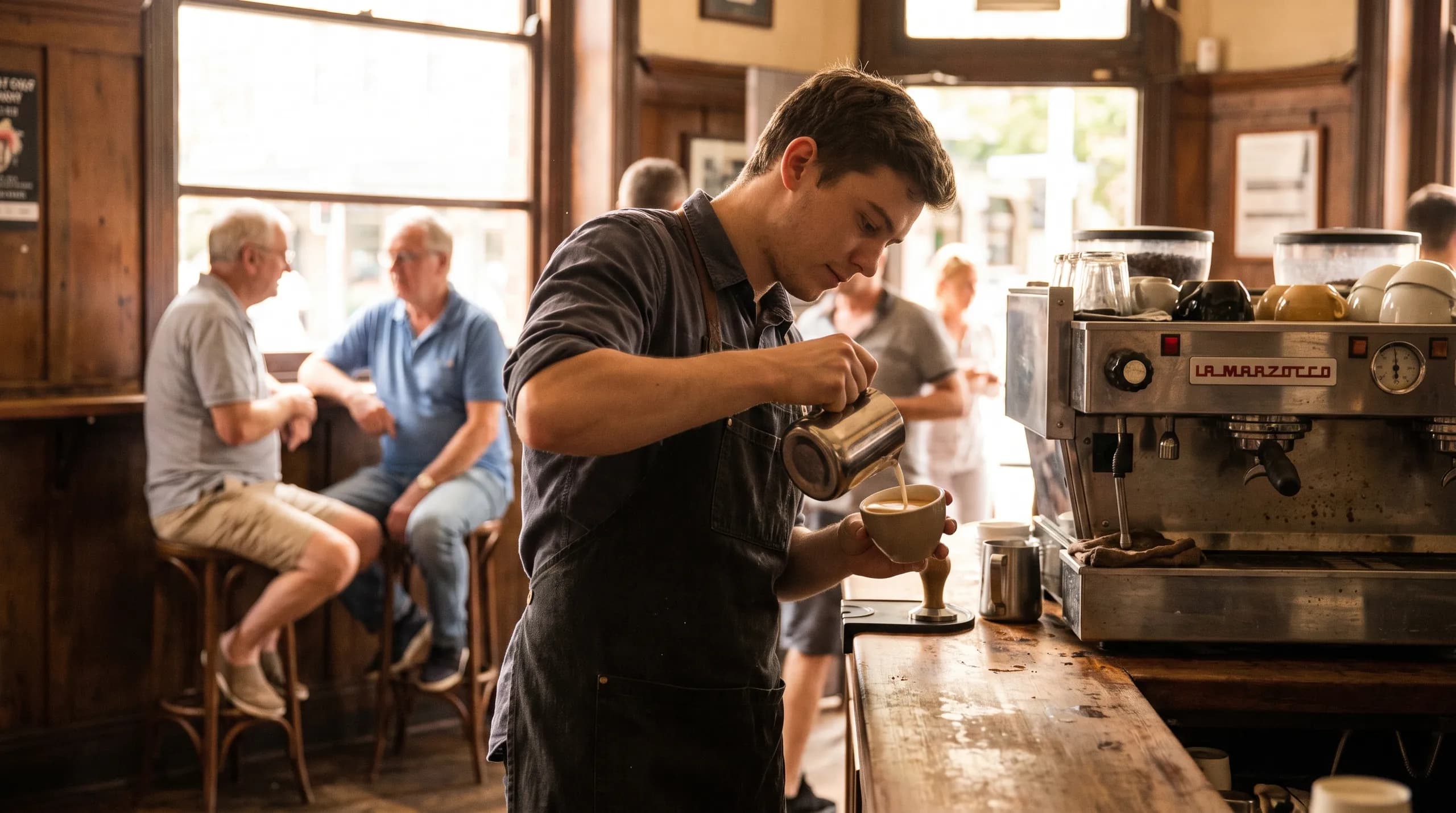
Its own example is an electrician told to come in 15 minutes early to load the van. The boss paid him from the first job instead. The FWO's answer: he's paid from when he gets to the office. Swap the van for a coffee machine and a float, and that's every cafe opener in the country.
"If you've been asked to arrive early for a team meeting, or to stay late because the team is short-staffed, know it's paid time." Fair Work Ombudsman, October 2026
The same page covers the other half of the problem. Timesheets "shouldn't be changed unless it's to correct an error", and your hours shouldn't be rounded down to pay you less than you worked. Closing at 11:12pm and being paid to 11:00pm is a rounding down.
What 5, 10, 15 and 30 unpaid minutes cost you in a year
Here's the maths for a Level 2 casual (a typical bartender or food and beverage attendant) on four weekday shifts a week, working 48 weeks of the year. The rate is the Hospitality Award casual weekday minimum of $33.85 an hour from 1 July 2026, and super is the 12% compulsory employer rate set by the ATO.
| Unpaid per shift | Per week (4 shifts) | Hours a year | Wages lost | Plus 12% super | Total |
|---|---|---|---|---|---|
| 5 minutes | 20 minutes | 16 | $541.60 | $64.99 | $606.59 |
| 10 minutes | 40 minutes | 32 | $1,083.20 | $129.98 | $1,213.18 |
| 15 minutes | 1 hour | 48 | $1,624.80 | $194.98 | $1,819.78 |
| 30 minutes | 2 hours | 96 | $3,249.60 | $389.95 | $3,639.55 |
Those are weekday figures, so they're the floor. If the unpaid quarter-hour lands on your Saturday close, it's worth $40.62 an hour, and on a Sunday $47.39 (Level 2 casual rates in the FWO pay guide). Fifteen minutes on four Sunday shifts a week would be $2,274.72 a year before super.
What counts as work on a hospitality shift
The test is whether the venue requires it, not whether a customer is in the building. Here's how the usual jobs either side of service sort out.
| Task | Paid? | Why |
|---|---|---|
| Set-up before doors: machine on, float in, chairs down, prep | Yes | Opening a store is on the FWO's list |
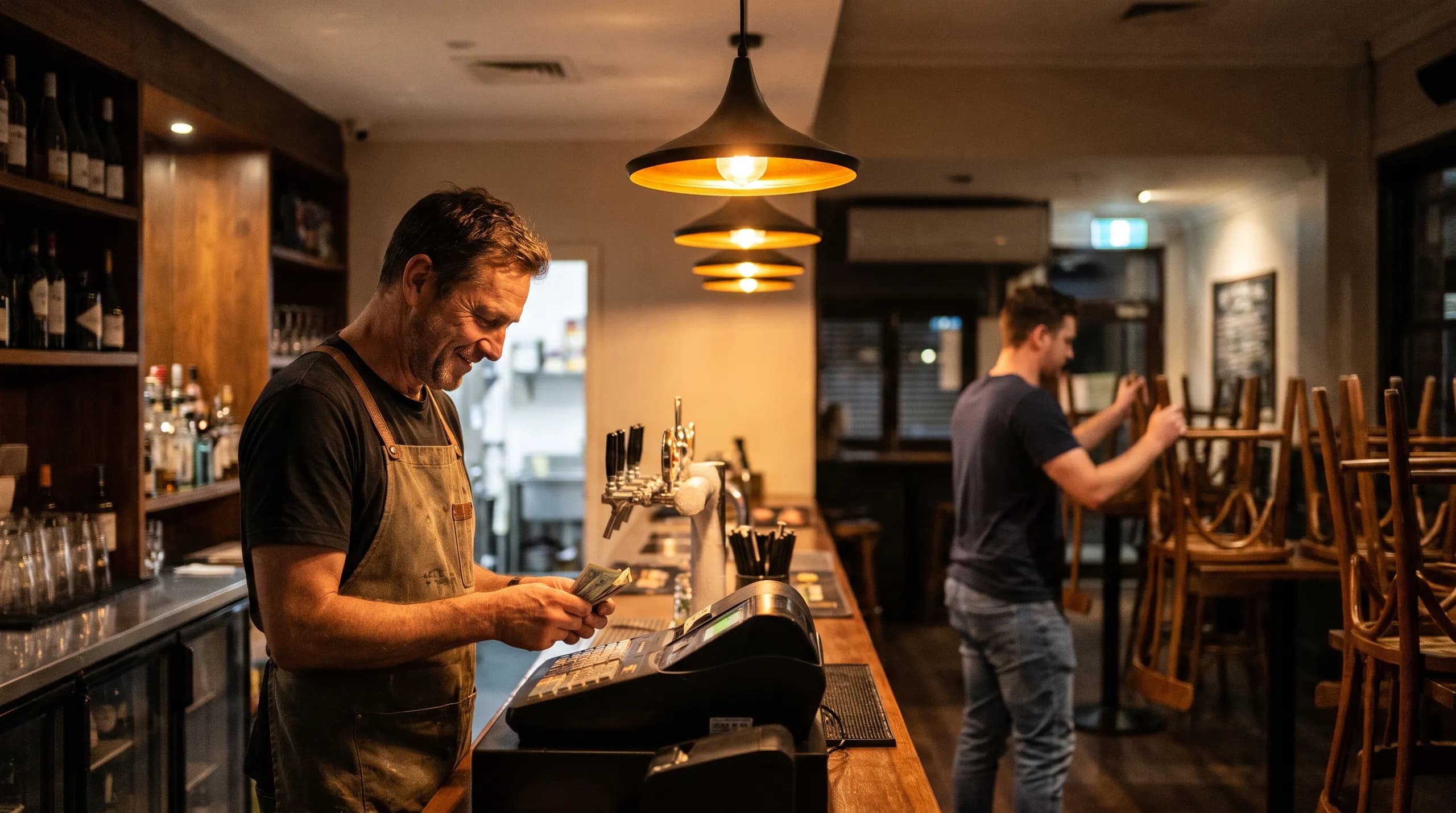
| Cash-up and till count after close | Yes | It's closing work the venue needs done |
| Close-down: mopping, restocking, glasswasher, bins | Yes | Closing a store is on the FWO's list |
| Pre-shift briefing or staff meeting | Yes | Meetings are on the FWO's list |
| Compulsory online modules (allergens, venue induction) | Yes | Training is paid, including online or at home |
| Staying back because someone called in sick | Yes | The FWO's own example: staying late because the team is short |
| Turning up 20 minutes early by choice, then sitting out back with a coffee | Usually not | Nobody required it, and you weren't working |
That last row is the honest catch. The FWO says "in most cases", and the line is whether you were asked or expected to be there. If you're early by choice and not working, it's your time. If you're early and the manager hands you a float to count, you're on the clock, whatever the roster says.
Clocking in early policies
Plenty of venues say "don't clock in before your rostered start". That's fine as a rule about when you start work. It isn't fine if the venue also expects the machine warmed up and the float counted before that start time. If the work is required, the time is paid, so either the roster moves or the jobs wait.
How to get the time back without torching the job
- Write down your real times for two weeks. Start, finish and breaks, every shift. The FWO's free Record My Hours app can record them automatically by location, or a notes app works.
- Note what you were doing. "Arrived 4:45pm, counted float, set up bar, doors 5pm" is far stronger than a bare time.
- Check it against your payslip. If the payslip shows 5pm to 11pm and your log shows 4:45pm to 11:15pm, that's 30 minutes a shift. Our guide to checking a hospitality payslip walks through the other lines worth a look.
- Raise it as a fix, not an accusation. Something like: "I've been doing set-up from 4:45. Can my start time go on the timesheet as 4:45, or can set-up wait until 5?" Most managers fix it there.
- If it doesn't change, get help. The FWO's Infoline is 13 13 94, and its Time worked is time paid page links to its guide to fixing a workplace problem.
Your log is backup, not the official record. The FWO notes the app "doesn't replace an employer's record-keeping obligations": venues must keep a record of all their employees' work hours. Your notes just make the conversation easy when theirs say 5pm.
Rounding works both ways on paper, not on payslips. If a venue rounds every start up to the next quarter-hour and every finish down, it's only ever rounding your hours down. Venue owners see the same leak from the other side in the Ghost Hour, and minute-level clock-ins fix it for both.
Where Shiftly fits
Unpaid set-up time mostly happens where the hours live in someone's head or a paper sheet. Venues on Shiftly roster, record timesheets and check pay against the award in one free platform, with clock-ins kept to the minute rather than tidied to the hour. The award interpretation is a calculation tool, so the venue still checks the result, but a 4:47pm clock-in stays 4:47pm on the record.
Shiftly also has an on-demand staffing network built in, available along the east coast of Australia, hospitality first. Workers on the network get offered shifts at venues nearby, see what a shift pays before they accept it, and get paid fast once it's done. Find shifts on Shiftly.
Frequently asked questions
Do you get paid if you clock in early?
You get paid for time the venue requires you to be at work, whatever the roster says. If you're asked to come in early to set up or for a briefing, that time is paid. If you arrive early by choice and don't start working, it usually isn't, so ask your manager which it is before it becomes a habit.
Do I get paid for staff meetings?
Yes, when the venue asks you to attend. The Fair Work Ombudsman lists time spent in meetings as work that must be paid, and its own example is being asked to arrive early for a team meeting. The same goes for required training, including online modules done at home.
Is it legal for my employer to round my hours?
Not down. The FWO says an employee's hours shouldn't be rounded down to pay them less than they worked, and timesheets shouldn't be changed except to correct an error. Rounding that lands in your favour isn't the problem; rounding that always shaves your finish time is.
What if I was told staying back is just part of the job?
Being told it's normal doesn't make it unpaid. The FWO says staying late because the team is short-staffed is paid time. Keep your own log of start and finish times, raise it with your manager first, and call the Fair Work Infoline on 13 13 94 if nothing changes.

Co-founder of Shiftly. Milan works with hospitality businesses across Australia to make rostering, timesheets and award-based pay radically simpler.