Someone dropped a Saturday: the four ways to cover it, and what each one costs

Every shift-swap feature stops at the same place: offer the shift, ping the team, approve. Here's what to do when nobody in house says yes, with one eight-hour Saturday close priced four ways against the Hospitality Award.
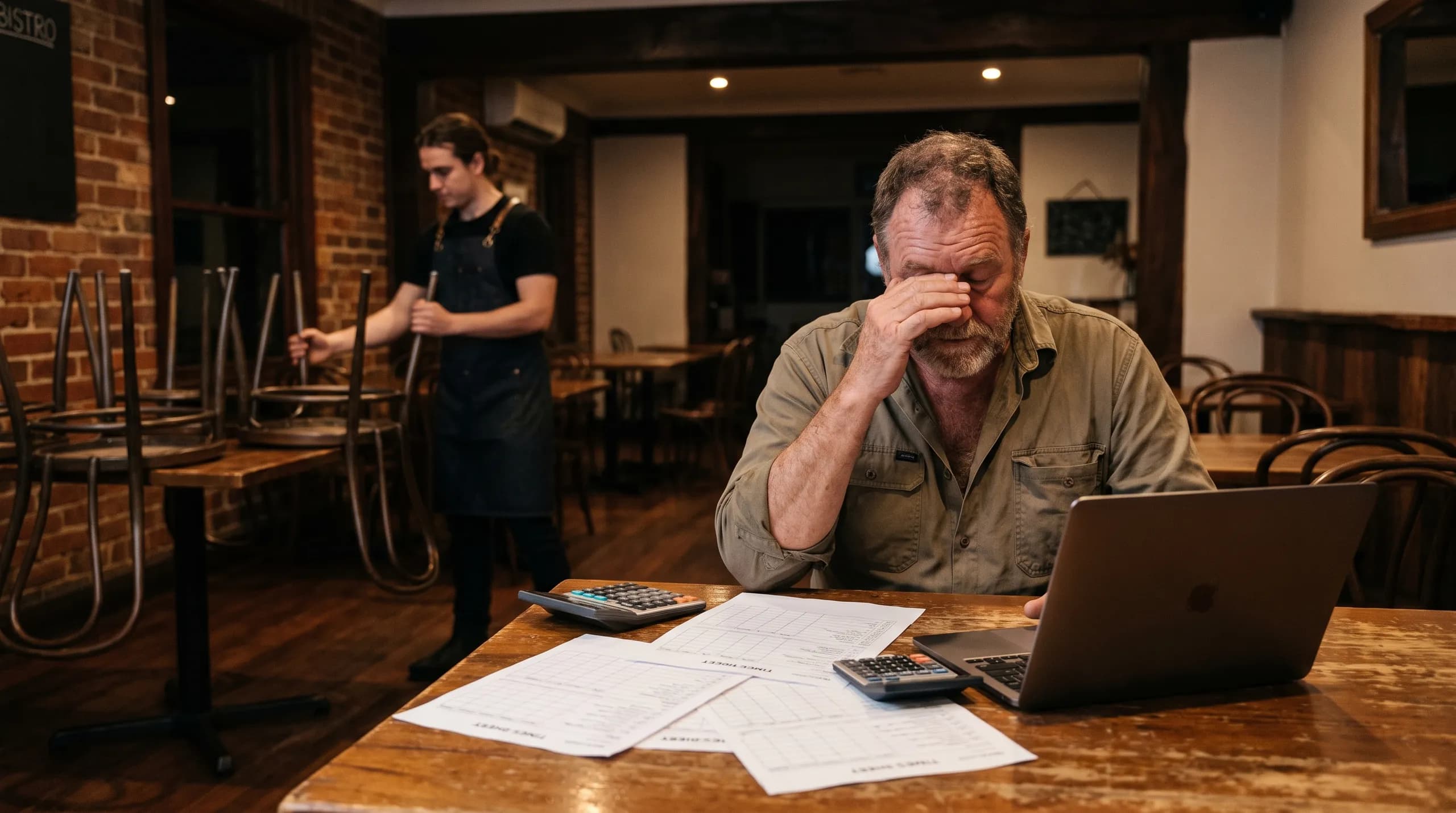
It's 11am on a Saturday and your Level 2 casual has just pulled out of tonight's 4pm to midnight close. Give that shift to someone who has barely worked this week and it costs $324.96 in wages. Give it to the casual who always says yes, who is already on 38 hours, and it's $433.28, or $467.94 once on-costs land. That's agency money.
Most venues reach for the group chat, and the shift-swap pages from the big rostering apps sell a tidier version of it: the employee offers the shift, the app pings whoever is free and qualified, a manager approves. That covers the first two rungs of a four-rung ladder, and it does take the chase, which we clocked at about 45 minutes a swap, off your phone. None of them say what to do at noon when nobody in house says yes.
The short version: work the four routes in order. Open the shift to qualified staff who are under their hours, then someone already on this week (check their hours first), then an on-demand pool, then an agency. The cheapest cover is whoever is furthest from 38 hours, not whoever answers first. Figures are adult casual minimums under the Hospitality Award (MA000009) from the first full pay period on or after 1 July 2026. General information, not legal or financial advice.
The four ways to cover it, side by side
| Route | Who it reaches | What it takes from you | Where it breaks |
|---|---|---|---|
| 1. Open swap to qualified staff | Staff who hold the ticket, are free tonight and are under their hours | One post, and the first to accept takes it | A bench of three people who can legally do the job |
| 2. Someone already rostered | The same five people you always ask | One ask, plus an hours check most managers skip | The 38 hour cap, and the 10 hour break for permanents |
| 3. On-demand marketplace | Hospitality workers outside your team, filtered to the role | Post it, read the profiles, accept | How deep the local pool is that night |
| 4. Labour hire agency | Whoever they have spare, new to your floor | One call, and a rate you can't see inside | The margin, and a stranger on your busiest night |
One Saturday close, priced four ways
Here's that 4pm to midnight close at a Sydney pub over the NSW payroll tax threshold. A Level 2 casual earns $40.62 an hour on a Saturday, which is 150% of the $27.08 ordinary hourly rate with the casual loading built in, and once they pass 38 hours for the week, clause 11.4 moves every further hour to weekend overtime at $54.16. The loaded column adds 12% super on ordinary hours, workers compensation at the 2.55% pubs rate and 5.45% payroll tax, the same ledger we used for what a casual hour really costs you.
| Who covers it | How the 8 hours are priced | Wages | Cost to you, loaded |
|---|---|---|---|
| Open swap: a casual on 6 hours this week | 8 at $40.62 | $324.96 | $393.07 |
| Rostered casual on 34 hours | 4 at $40.62, then 4 at $54.16 | $379.12 | $430.51 |
| Rostered casual already on 38 hours | 8 at $54.16 | $433.28 | $467.94 |
| Labour hire agency | Your loaded cost plus a margin, usually 15% to 25% | Built into the quote | About $452 to $491 |
| On-demand marketplace | The rate you set, plus an 8% service fee | The rate you set | Your rate plus 8% ($26 on a shift set at $40.62 an hour) |
Put the first and third rows side by side. Same shift, same work, $108.32 apart in wages, and the only thing that moved was how many hours the taker had already done. At $467.94 loaded, the casual on 38 hours sits inside the band an agency margin would put on the same Saturday, which is the trap behind casual overtime catching venues out.
The casual who always says yes is, almost by definition, the one closest to 38 hours.
Two honest caveats. If the casual works to a roster, clause 11.2 lets the 38 hours be averaged over a cycle of up to four weeks, so a heavy week can balance against a light one. And agency pricing varies: one Sydney labour hire provider publishes a flat $52 an hour, $416 for this shift and cheaper than your own overtime, so ask whether a quote is loaded for Saturdays.
When nobody in house says yes: the timeline for an 11am drop
- 11am, open it to the people who can take it. Only staff who hold an RSA, are free tonight and are under 38 hours for the week. First to accept takes it. Give it an hour.
- Noon, look at who is already on this week. Check their hours to date before you ask, not after, because that number decides whether each hour is $40.62 or $54.16.
- 12:30pm, widen the pool. Post the same shift to an on-demand marketplace so it reaches hospitality workers outside your team, and read their profiles before you accept. More people beats more messages to the same five.
- 2:30pm, call the agency if the book is full. You're paying a margin on top of what the hour already costs, for someone who has never seen your bar. Worth it on a packed Saturday, rarely worth it for a Tuesday lunch.
- Running short is not rung five. The wage you save is the smallest line on the bill, as the real cost of a no-show shift shows, so set your agency cutoff before you need it.
Three checks before you tap approve
- Can they legally do the job? In NSW, anyone who sells, serves or supplies alcohol to the public needs RSA training, and a full course is required again once that training is more than five years old. A group chat can't filter for a ticket, so that check lands on you.
- What does the hour actually cost? Clause 11.2 engages a casual for a maximum of 12 hours a day and 38 hours a week, and clause 11.4 prices everything past that at overtime rates. The taker's week to date sets the rate, not the shift.
- Can they still work tomorrow? For full-time and part-time staff, clause 15.5(e) requires a 10 hour break between finishing ordinary hours one day and starting the next. Cover a midnight Saturday finish with your 8am Sunday opener and you've moved the hole, not filled it.
Where Shiftly fits
Rungs one and two are what most rostering apps sell. Shiftly is free workforce management for Australian venues, built as the roster that fills itself: you open the shift from the roster you already run, to staff who hold the ticket and are under their hours, with an award calculation tool that helps you estimate the cost before you approve rather than after the pay run.
When nobody in house says yes, the same shift goes out to local hospitality workers on Shiftly On-Demand, and you read their profiles, ratings and shift history before you accept. Shifters are engaged directly by your venue as independent contractors; Shiftly facilitates the match and isn't the employer, an agency or a payroll provider. The rostering costs nothing, and a filled on-demand shift carries an 8% service fee. Get started with Shiftly.
Frequently asked questions
Is there a smarter way to handle last-minute shift swaps than a group chat?
Yes. Send the shift only to staff who are free, hold the ticket the role needs and are under their hours, and let the first person to accept take it, which fixes the bystander problem and the qualification check in one move. Most tools stop there, so decide in advance what happens when nobody says yes: an on-demand pool first, then an agency.
Can covering a shift cost more than the original shift?
Yes, and the trigger is the taker's hours, not the swap. Under MA000009 a casual is engaged for a maximum of 38 hours a week before clause 11.4 sends every further hour to overtime, so a Level 2 Saturday hour goes from $40.62 to $54.16. Across an eight-hour close that's $108.32 more for identical work.
Do my staff have to answer a message asking them to cover tonight?
Not necessarily. Clause 15A of the Hospitality Award reflects section 333M of the Fair Work Act: unless refusing would be unreasonable, an employee may refuse to monitor, read or respond to contact from their employer outside working hours, which we cover in the 'can you cover tonight' text. It has applied since 26 August 2024, or 26 August 2025 for small business employers.

Co-founder of Shiftly. Milan works with hospitality businesses across Australia to make rostering, timesheets and award-based pay radically simpler.